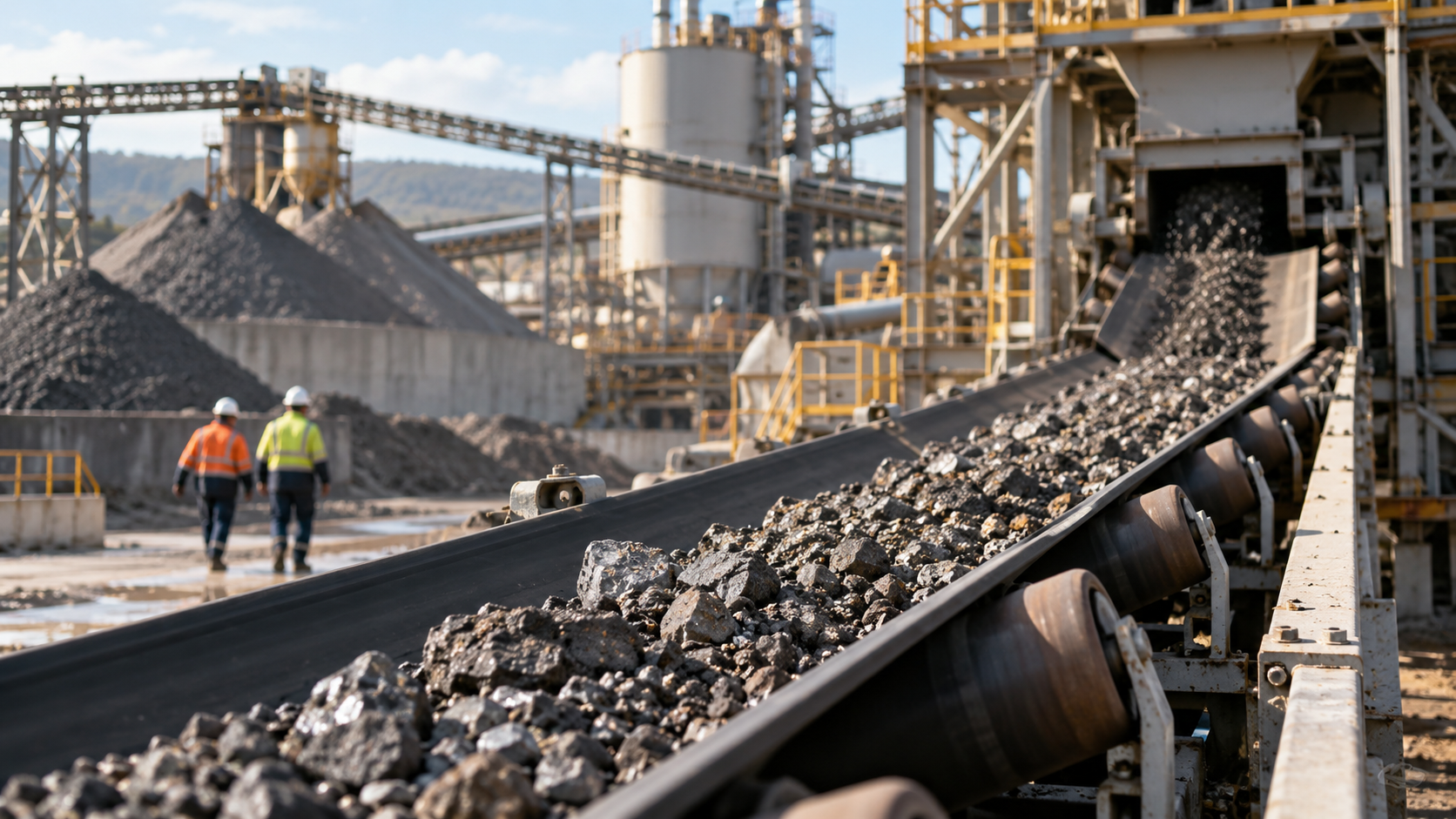
Our modern world is built on a paradox. We are racing towards a high-tech, green future of electric vehicles, wind turbines, and ubiquitous computing, yet this entire enterprise is balanced precariously on a handful of obscure materials: rare earth elements (REEs), cobalt, and other critical minerals. With demand soaring and supply chains dominated by a few nations, the world is in a quiet panic, desperately searching for a new, reliable source.
Enter the ocean’s “next big thing”: deep-sea mineral nodules.
Lying scattered across abyssal plains, miles beneath the surface, these potato-sized lumps of metal are the stuff of geopolitical dreams. They are, in theory, a treasure trove. Proponents paint a picture of a simple solution: great robotic vacuums crawling the seabed, sucking up a resource that is, by all accounts, astonishingly rich.
This is the seductive promise, and it’s a powerful one. These nodules hold concentrations of the very metals we crave – sometimes as much as 20 times more concentrated than what we painstakingly extract from conventional land-based mines. In a world defined by scarcity, this sounds like a miracle.
And it is – in the sense that it’s likely a mirage.
While I’ve been tracking this technology with great interest, a sober analysis reveals that the entire premise of deep-sea mining is built on a foundation of questionable physics, nightmarish economics, and, most importantly, a profound misunderstanding of the actual problem.
The Crushing Weight of Reality
Let’s start with the first, most obvious hurdle: the “how.”
The technology to recover these nodules is, to put it politely, “at best questionable.” We are not talking about simple dredging. We are talking about operating complex, heavy machinery on a seabed often a mile or more below the surface, in crushing pressures and total darkness.
The current “solution” is essentially to deploy a massive dredge, churn up the seabed in a process that is guaranteed to be environmentally catastrophic (destroying entire, poorly understood ecosystems), and then attempt to lift that material.
This is where the economics collides with basic physics. You aren’t just bringing up neat, clean nodules. You are pumping a column of ore, mud, and seawater, a heavy, abrasive sludge, one vertical mile up to a processing ship. Once on the boat, you have to separate this sludge, dump what you don’t want (another environmental question mark), and then transport the concentrate for processing anyway.
As of today, the energy, engineering, and financial costs of this single “recovery” step are so astronomically high that the technology has not evolved anywhere near the point of being economically viable. The physics of the recovery alone makes it a non-starter.
Solving the Wrong Problem
But let’s engage in the fantasy. Let’s say we wave a magic wand and the recovery problem is solved. The environmentalists are silenced, the physics works, and the economics are favorable.
It still doesn’t matter.
Even if we could magic these nodules onto a processing plant, deep-sea mining fails to solve the real bottleneck.
To understand why, you need to understand the dirty little secret of rare earth elements: we don’t really have a shortage of the minerals themselves. We have a shortage of processing.
Right now, almost all rare earths are produced as a byproduct of other mining operations. A company spends billions to build a mine for, say, silver, aluminum, or zinc. They make their primary income selling that main material.
The REEs are just trace elements left over in the waste rock, known as “tailings.” These tailings are then sent to a second facility for the complex, chemically-intensive process of extracting the rare earths. This is a bonus, a kicker on the back end. The silver mine already paid for the digging.
Now, look at the deep-sea nodule model. You’re doing the same thing, just infinitely harder. You’re spending all that money on the “dredging” part, but you don’t have a primary product like silver to pay the bills. You are, in effect, mining only the tailings.
You still have to do all the expensive, difficult REE processing, but you have no primary income stream to subsidize it. For this model to work, the price we pay for rare earths would have to increase by a factor of 100. And if that happens, it means every other (and much easier) form of mining and processing has already shut down.
The ‘Boring’ Solution We Refuse to See
This brings us to the real issue, the one that makes the deep-sea chase so baffling. We are trying to invent a catastrophically complex, sci-fi solution for a problem that is, in reality, simple, cheap, and based on century-old technology.
The real solution is not on the seabed. It’s on land. We just need to build more processing plants.
We don’t have a global shortage of rare earth minerals; they are a byproduct of almost every type of mining. What we have is a shortage of the will to process them.
For decades, we have outsourced this work, primarily to China, which used a combination of state subsidies and a high tolerance for environmental shortcuts to corner the market. But the technology itself? It’s not magic. It’s basic metallurgy. It’s a smelter.
We are already seeing this shift begin. Australia, Malaysia, France, and the United States are all slowly building or reopening processing capacity. The solutions are easy. They are not expensive, in the grand scheme of industrial policy. We simply have to choose to do it.
But here, we hit the final, human barrier. This kind of industry isn’t “sexy.”
Americans, in particular, prefer to talk about the finished products: the jets, the semiconductors, the gleaming electric cars. We are culturally allergic to the “boring stuff” – the gritty, industrial work of separating the bits of metal you want from the bits of rock you don’t.
We’d rather dream of futuristic submarine-vacuums in the Marianas Trench than have a pragmatic discussion about zoning a new smelter in Texas or Ohio.
The sooner we get over this mindset, the sooner we can end this manufactured crisis. We don’t need to dredge the abyss. We just need to build a stupid smelter.
Read our full Report Disclaimer.
Report Disclaimer
This report is provided for informational purposes only and does not constitute financial, legal, or investment advice. The views expressed are those of Bretalon Ltd and are based on information believed to be reliable at the time of publication. Past performance is not indicative of future results. Recipients should conduct their own due diligence before making any decisions based on this material. For full terms, see our Report Disclaimer.