
The joint US-Israeli offensive against Iran, launched on 28 February 2026, has done what five previous energy shocks failed to permanently resolve: it has exposed Europe’s structural inability to secure its own energy supply. More than a month into the conflict, the Strait of Hormuz remains effectively closed, with daily transits down roughly 96% from pre-war levels. Oil hovers around $100 per barrel. European gas benchmarks have doubled. And the continent’s politicians are, once again, scrambling for answers they should have found decades ago.
This is not a drill. It is not a theoretical exercise in energy security modelling. It is the sixth major energy crisis to hit Europe in fifty years, and the margins for recovery are thinner than they have ever been.
The strike that broke the market. The turning point came on 18-19 March, when Israeli drones struck gas processing plants at Asaluyeh, the onshore hub for Iran’s South Pars field, the largest natural gas reservoir on the planet. South Pars supplies 75% of Iran’s domestic gas consumption and produces between 600,000 and 700,000 barrels per day of condensate, a critical feedstock for Asia’s petrochemical industry. Crucially, South Pars and Qatar’s North Field are the same geological reservoir, divided only by a maritime border. What happens on one side reverberates on the other.
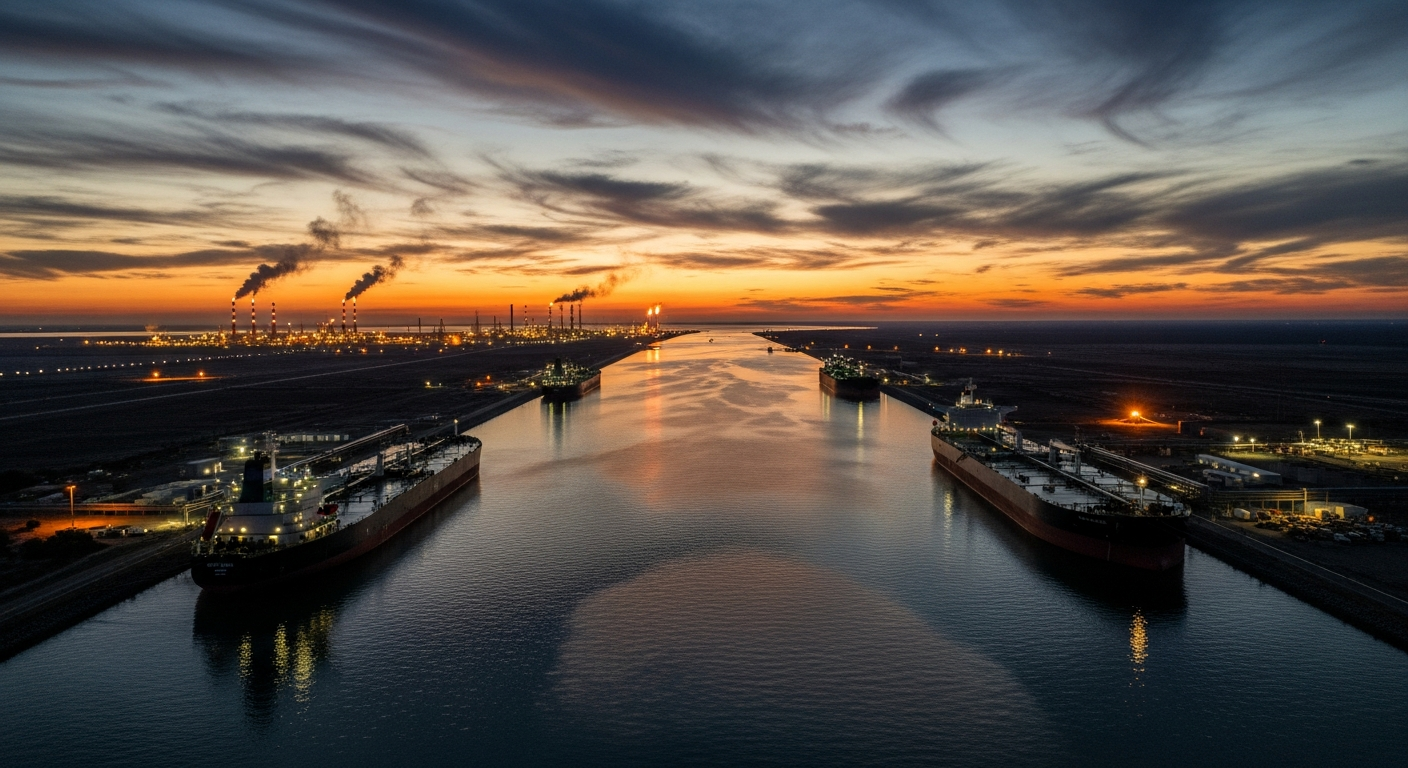
Tehran’s retaliation was immediate and devastating. Iranian missiles struck energy infrastructure across the Gulf, hitting facilities in Saudi Arabia, the United Arab Emirates, and most consequentially, Qatar’s Ras Laffan complex. Ras Laffan is the largest liquefied natural gas export hub on Earth, responsible for roughly a fifth of all LNG traded globally. According to QatarEnergy’s CEO, two of fourteen liquefaction trains and one gas-to-liquids plant were destroyed, eliminating 17% of Qatar’s export capacity for an estimated three to five years. The damage bill: over $26 billion in destroyed equipment and more than $10 billion per year in lost revenue. A planned expansion of North Field extraction capacity now faces indefinite delay.
Since LNG operates as a global spot market, this is not merely Qatar’s problem. When one buyer faces a supply shortfall and raises its bid, tankers redirect mid-voyage to chase the higher price. The destruction at Ras Laffan does not just affect Qatar’s contracted customers in India, South Korea, China, and Europe. It reprices every cargo on every route.
Europe: the most exposed major economy. The European Union imports 57% of all energy it consumes. Crude oil import dependency reached a record 97.7% in 2022. Gas import dependency exceeds 85% of total consumption. After severing nearly all ties with Russian supply, more than 45% of imported gas now arrives in liquefied form, primarily from the United States. Europe did not reduce its dependence on external energy after 2022. It merely changed the supplier and lengthened the supply chain.
The Dutch TTF benchmark, Europe’s reference gas price, has surged from around EUR 30 per megawatt-hour before the crisis to between EUR 50 and 70, depending on the day’s headlines. Goldman Sachs has warned that if the Hormuz closure persists for even a couple of weeks more, prices could exceed EUR 73. Euronews modelling suggests a three-month disruption could push TTF toward EUR 155, with a six-month scenario averaging EUR 160 and spiking above EUR 200. These are not fringe projections. They are the base case if diplomacy fails.
The most immediate problem is storage. Winter has just ended and European gas reserves sit at critically low levels. EU regulation mandates that storage be filled to 90% capacity before the next heating season. Reaching that target requires purchasing approximately 696 terawatt-hours of gas at current elevated prices, a bill of roughly $36 billion. But the futures market has inverted: summer gas is now trading above winter gas, because traders expect the crisis to ease over time. This means every cubic metre stored today is a guaranteed loss. No rational operator will fill storage under those conditions. EU Energy Commissioner Dan Jorgensen has already called on member states to lower the target to 80% and to intervene directly to finance stockpiling. Even 80% is not reassuring.
Asia’s parallel reckoning. Europe is not alone in its exposure. Japan imports 87% of its primary energy and sources over 90% of its crude from the Middle East. Its LNG reserves cover just two to three weeks of consumption. South Korea faces a near-identical dependency profile. China, the world’s largest LNG importer, loses 30% of its contracted Qatari supply. Pakistan and Bangladesh, the most fragile importers, are already experiencing rolling blackouts reminiscent of 2022. Across the region, coal and nuclear are receiving emergency reconsideration, pragmatism overriding climate commitments under the pressure of physical scarcity.
The cascading effects extend well beyond energy. Fertiliser production, essential as the northern hemisphere enters planting season, depends heavily on Gulf petrochemicals. Airlines are raising fares and cutting routes. Road transport costs are feeding directly into consumer prices. The International Energy Agency has described the crisis as the greatest threat to global energy supply in history and has begun recommending, cautiously for now, that citizens work from home, drive more slowly, and moderate their use of gas appliances.
The Western alliance fractures. If the energy dimension is alarming, the geopolitical fallout may prove more consequential still. The Iran offensive has split NATO in a manner not seen since the 2003 Iraq invasion. Spain closed its airspace to US military aircraft. Italy denied basing access in Sicily. France refused transit for military supplies bound for Israel. Britain’s prime minister declared bluntly that this is “not our war.” Poland rejected requests to relocate Patriot missile systems to the Middle East. Trump, characteristically, responded by threatening NATO withdrawal and calling European allies “paper tigers.”
The fracture is significant because it reveals a structural tension that the alliance has long papered over. European states depend on American security guarantees but increasingly refuse to support the military operations through which Washington exercises its power. The United States, meanwhile, is energy self-sufficient and actively profiting from the crisis through elevated crude exports. If the conflict drags on and American midterm polling deteriorates, the risk of Washington restricting energy exports to lower domestic prices is real. The US exports around four million barrels per day of crude and nearly eleven million barrels of refined products, in addition to supplying the vast majority of Europe’s LNG. Export restrictions would be catastrophic for the global market. The probability may be low. The consequences would not be.
Fifty years, six crises, one pattern. The Oxford Institute for Energy Studies has identified five major energy shocks in Europe since the 1970s: the 1973 Arab oil embargo, which quadrupled crude prices; the 1979 Iranian revolution, which doubled them again; the 2005-2008 commodity super-cycle; the post-COVID gas squeeze of 2021; and Russia’s 2022 invasion of Ukraine, which sent TTF above EUR 300 and eliminated nearly one million European industrial jobs. Each crisis produced the same sequence: emergency measures, solemn pledges of energy independence, and a quiet return to dependency once prices eased.
The 2026 Iran war is the sixth iteration, and the structural position is worse than at any previous point. Russian gas is already gone. North Sea reserves are depleted to roughly 19% of their 1997 peak. Nuclear capacity was dismantled across much of the continent on ideological grounds, a decision whose consequences Germany in particular is now absorbing. The renewable buildout is real but cannot yet substitute for baseload fossil generation at the scale required. And the carbon market, designed to structurally reduce fossil demand, is being loosened at precisely the moment when reduced demand would serve Europe’s interests, potentially increasing the scramble for scarce gas and prolonging the crisis.
The United Kingdom offers a particularly instructive case study. It retains gas reserves in the North Sea, diminished but real. Yet successive governments chose to impose restrictions on domestic extraction while importing LNG from the United States and Qatar at a 30% higher carbon footprint than local production. The policy achieved the remarkable triple failure of increasing emissions, surrendering energy security, and forfeiting tax revenues that could have financed the transition to renewables. It is difficult to design a worse outcome on purpose.
The question that remains. Ceasefire negotiations are underway. Trump has paused strikes on Iranian energy infrastructure and claims talks are progressing. Tehran denies this. Pakistan and China have tabled a five-point peace plan. The war may end soon, or it may not. But even if hostilities cease tomorrow, the damage to Ras Laffan alone guarantees structurally higher LNG prices for years. The supply that was destroyed cannot be rebuilt on a political timeline. Europe’s strategic options are narrowing with each successive crisis, and the honest assessment is uncomfortable: the continent is running out of shocks it can absorb without permanent economic damage. Whether this one finally forces a structural response, or merely accelerates the decline that each previous failure made more likely, is the only question that matters.
Read our full Report Disclaimer.
Report Disclaimer
This report is provided for informational purposes only and does not constitute financial, legal, or investment advice. The views expressed are those of Bretalon Ltd and are based on information believed to be reliable at the time of publication. Past performance is not indicative of future results. Recipients should conduct their own due diligence before making any decisions based on this material. For full terms, see our Report Disclaimer.