Spend any time in tech circles or on social media, and you’ll hear the grumbling. OpenAI’s new model, GPT-5, is supposedly a “downgrade.” It’s less “personable,” users complain, not as “complete” as its revolutionary predecessor. This chatter, this focus on the user-friendliness of a chatbot, is the single greatest distraction from the real story of artificial intelligence.
While the public debates the “feel” of their laptop interface, they are missing the entire point. The truth is, the jump from GPT-4 to GPT-5 was never about you. It was designed for institutional users – for coders, for drug designers, for organizations needing to crunch monumental tasks on the back end. OpenAI’s Sam Altman is already walking back some changes, tweaking the new model with characteristics from the old to keep everyone happy.
But this entire debate, which algorithm feels “nicer”, is a parlor game. It obscures a much larger, more fragile, and far more dangerous reality. The real story of the new “space race” for AI is not one of software, but of hardware. Not of algorithms, but of atoms.
The Software Illusion
Here’s the first secret: the AI itself, the “brain” like ChatGPT, isn’t the problem. The groundbreaking GPT-4 algorithm that so many found revolutionary took up only about 10 terabytes of memory. That’s a data load you could quite literally carry in your hand on a few thumb drives. Its more advanced successor, GPT-5, is perhaps double or triple that size – an impressive, but not insurmountable, amount of data.
If OpenAI, through corporate espionage or an act of rogue benevolence, “lost” the algorithm and it spilled out into the wild, almost anyone could possess it.
But they couldn’t use it.
What makes AI function in the way we now understand it, this smooth, instant-response oracle, is not the software. It is the raw, brutal processing power required to run it. This power lives in massive, energy-hungry data centers, the largest the world has ever seen. These facilities are the only things capable of handling the millions of simultaneous requests, running them through the algorithm, and spitting out the results.
The limiting factor in our AI future isn’t the ghost in the machine; it’s the machine itself. And that machine is built on a foundation of sand.
The 9,000-Company Problem
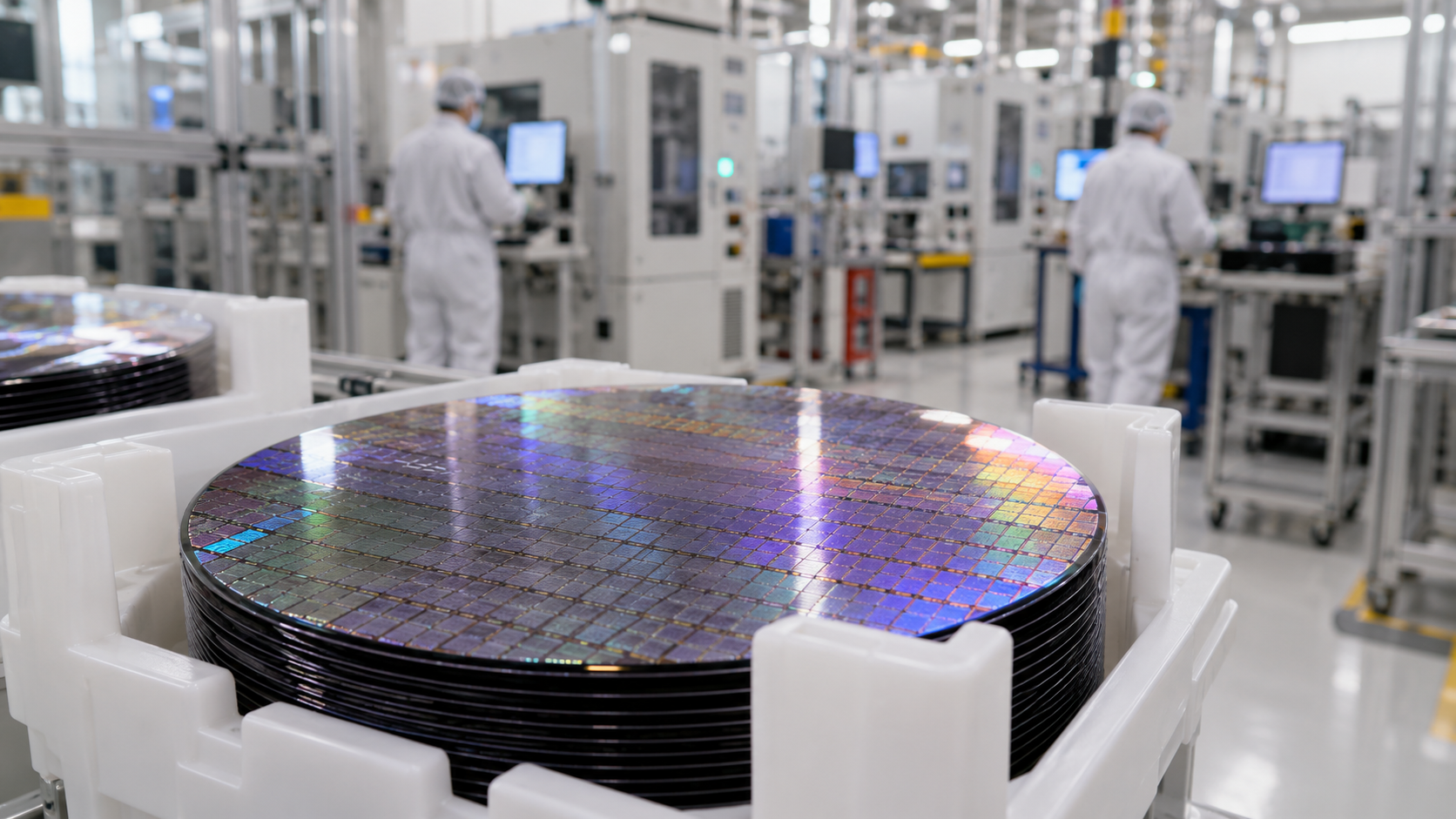
The hardware that powers our AI world is the high-end processing chip, the kind famously produced in Taiwan. What most people don’t grasp is the almost supernatural complexity of its creation.
Making a single advanced chip is not a process; it is a global miracle. It requires an estimated 100,000 distinct steps. It involves 30,000 individual pieces supplied by 9,000 different companies scattered across the globe.
This is not a supply chain; it’s a glass sculpture balanced on a needle point.
The United States holds the single biggest concentration of these companies. The second is the Taiwan-centric manufacturing zone. The single most important company in the entire ecosystem is based in the Netherlands, but it relies on critical facilities in Germany, Austria, California, and Japan.
This system is riddled with single-point failures. If any one of these 9,000 suppliers, or any link between them, “falls out of work”, due to geopolitical conflict, natural disaster, or economic breakdown, the entire process stops. Not slows down. Stops. We simply lose the ability to make new high-end chips.
The Ticking Clock and the False Fix
Here is where the story turns dark. The chips currently sitting in those massive data centers have a brutally short lifespan. When run 24/7 at maximum capacity, they last, on average, just three to six years.
We are in a race against time, and we are losing.
You’ve heard the political fanfare about bringing manufacturing home. Governments, including in the United States, are pouring billions into “re-shoring” the chip industry. But this, according to deep supply-chain analysis, is a catastrophic miscalculation.
These efforts focus almost exclusively on building fabrication facilities, the “fabs” that exist in Taiwan. They are building the final assembly plant while ignoring the 9,000 other companies that supply it. This political theater ignores the chip design, the material inputs, the photomasks, the specialized wiring, and the crucial downstream steps of testing and packaging that make a chip functional.
To date, no one is even attempting to bring this entire, impossibly complex ecosystem under one roof. Frankly, it may not be possible. There are too many pieces and too many specialized players. And even if it were, in the UnitedStates, there aren’t enough qualified technicians to run these facilities anyway, given today’s record-low unemployment.
We are, right now, living in a fleeting moment of peak AI. This “ChatGPT 5.0” era, and all the wonders that will follow it in the next few years, will not last.
The Coming Regression
In the not-too-distant future, we will lose the ability to manufacture the hardware that supports our new world. As the existing 3-to-6-year-old chips begin to burn out, a “scramble” will begin. The fight will be over who controls the last functioning data centers.
The ability to use AI will rapidly shrink. It will evaporate from your phone and laptop and become, once again, the exclusive tool of the handful of entities, governments and massive corporations, that can afford to acquire and maintain their own private hardware.
We are not heading for a Skynet future where AI becomes self-aware and destroys us. We are heading for a technological regression, one that will begin within this decade.
We will be left with brilliant, portable software and no machines powerful enough to run it. It took us 60 years of incremental, globalized cooperation to build this glass sculpture. When it shatters, it will not be rebuilt in a season. The real threat to our AI future isn’t consciousness; it’s logistics.
Read our full Report Disclaimer.
Report Disclaimer
This report is provided for informational purposes only and does not constitute financial, legal, or investment advice. The views expressed are those of Bretalon Ltd and are based on information believed to be reliable at the time of publication. Past performance is not indicative of future results. Recipients should conduct their own due diligence before making any decisions based on this material. For full terms, see our Report Disclaimer.