Economic sanctions are the preferred coercive instrument of the modern Western state precisely because they sit between the diplomatic note and the cruise missile: cheaper than war, more credible than a communique. Yet the central finding of every serious study of the tool is uncomfortable for the policymakers who reach for it. Sanctions seldom change what a targeted regime actually does. What they reliably do instead is rearrange the architecture of global commerce, the plumbing of cross-border finance and the geometry of alliances, often in ways the imposing power neither intended nor wanted. The behaviour usually survives; the trade map does not. Understanding that asymmetry is the difference between using sanctions as a scalpel and wielding them as a bludgeon that reshapes the room while leaving the patient on the table.
The Record Is Modest, and the Modesty Is Structural
The most cited empirical baseline remains the dataset assembled by Gary Hufbauer, Jeffrey Schott and colleagues at the Peterson Institute for International Economics, which catalogues more than a century of episodes. Their accounting found that sanctions contributed to at least partial attainment of the stated objective in roughly a third of cases, and that the success rate has tended to drift downward over time, from something nearer half in the period before 1970 to about a third in the decades since. Subsequent scholars, applying stricter tests for whether sanctions were genuinely decisive rather than merely present alongside other pressures, push the figure lower still.
The interesting part is not the headline number but its distribution. Sanctions succeed far more often against friendly states than against neutral ones, and least often of all against outright adversaries. This is the opposite of how the instrument is marketed. It is deployed most aggressively against the regimes least likely to yield, because those are precisely the governments that have already priced in hostility, insulated their elites and built a domestic narrative in which external pressure confirms the leadership’s worldview rather than refuting it.
The mechanism of failure is therefore not a flaw in execution but a property of the target. A regime that has concluded its survival depends on a given policy, a nuclear programme, a territorial claim, control of its own population, will absorb extraordinary economic pain before abandoning it. Pain is the input; behavioural change is a separate and contingent output that depends entirely on the target’s private hierarchy of fears.
Trade Does Not Stop; It Bends
If sanctions rarely halt the offending policy, what they do with near-certainty is redirect the flow of goods. The clearest contemporary illustration is the trade in Russian crude oil. When a coalition of Western governments set a price ceiling of roughly 60 dollars per barrel and the European Union withdrew as a buyer, the oil did not stay in the ground. Europe’s share of Russian exports collapsed, and previously marginal customers, India foremost among them, rose to absorb a large share, with China taking much of the rest. The barrels found new buyers at a discount; the discount, not the volume, became the locus of pressure.
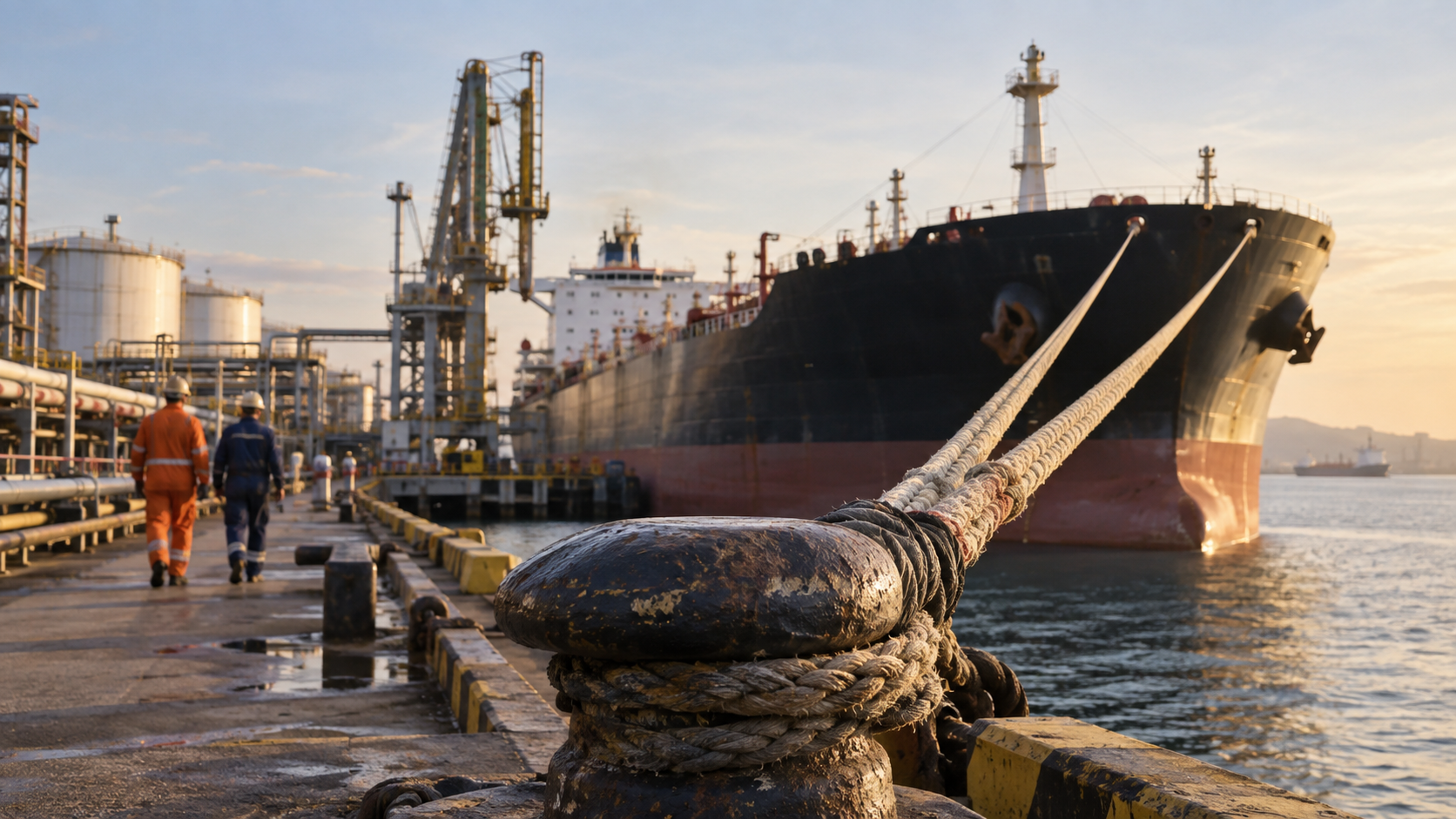
Around that rerouting grew an entire parallel logistics economy. A so-called shadow fleet of ageing tankers operating outside Western insurance and ownership chains expanded from a negligible presence into a force of several hundred vessels, with some catalogues citing well over a thousand once product carriers are included. These ships move sanctioned cargo through opaque ownership structures, ship-to-ship transfers and disabled transponders. By credible estimates the fleet now carries the majority of Russia’s seaborne oil. The state being coerced adapted; the global oil trade simply acquired a permanent grey tier that did not exist before and will not disappear when the sanctions do.
This is the durable outcome. Trade restrictions teach economies to build redundancy: alternative buyers, alternative shippers, alternative insurers, alternative ports. Once that capacity is constructed, it is sunk infrastructure. It persists as a standing option for the next sanctioned commodity and the next sanctioned country, lowering the cost of evasion for everyone who comes after.
The Plumbing Is the Real Weapon, and It Corrodes With Use
The most potent sanctions are not trade embargoes but financial ones, because they exploit the chokepoints of the dollar system: correspondent banking, dollar clearing and the SWIFT messaging network. Cutting major Russian banks from SWIFT and, more dramatically, freezing close to 300 billion dollars of the Russian central bank’s foreign reserves marked the first time such a measure had been applied jointly against the central bank of a Group of Twenty economy. The freeze was a demonstration that reserves held in Western jurisdictions are not sovereign property in extremis; they are a privilege contingent on conduct.
That demonstration is precisely why the financial weapon erodes as it is used. The lesson every non-aligned central banker drew was not that they should behave, but that they should diversify. China’s Cross-Border Interbank Payment System, launched in 2015 as a marginal alternative, has grown into a channel carrying a meaningful, if still modest, share of cross-border value, even though it continues to lean on SWIFT for much of its messaging. Bilateral settlement in local currencies, gold accumulation and the slow construction of non-dollar corridors have all accelerated, driven less by ideology than by risk management.
The caveat matters and cuts against the louder de-dollarisation rhetoric. The dollar still accounts for roughly 57 percent of allocated official reserves and sits on one side of close to 90 percent of global foreign-exchange transactions, and much of the recent decline in its reserve share reflects valuation effects rather than active flight. There is no imminent challenger. But durable structural shifts are made at the margin, and the margin is moving in one direction. The weapon works each time it is fired and loses a small, irreversible increment of its future potency with every shot.
The Imposer Pays the Second Bill
Sanctions are never costless to the side that imposes them, and the costs arrive on a delay. The most immediate is borne by the sanctioning economy’s own firms, which surrender markets and contracts to competitors in jurisdictions that do not enforce the restrictions. The deeper cost is the chilling effect of secondary sanctions, the threat to penalise any third party that deals with a designated entity. This produces de-risking: banks and corporations preemptively exit perfectly legal business rather than navigate the ambiguity, fragmenting the very networks the imposing power dominates.
Over time this generates a compliance industry and a constituency of states and institutions whose strategic interest is to build routes around the sanctioning power. Iran is the instructive long case: a maximum-pressure campaign that throttled, but never extinguished, its oil exports, while pushing its economy into structural alignment with the very rivals the West sought to isolate. The target adapts, the rival is handed a customer, and the imposer is left enforcing a regime whose marginal effect decays even as its administrative cost climbs.
When Sanctions Actually Work
The narrow band of genuine success has identifiable conditions. The objective must be modest and specific rather than regime-defining; a discrete policy concession is achievable, the survival of the government is not. The coalition must be broad enough to close the obvious escape routes, since unilateral measures simply redirect trade to non-participants. And, decisively, there must be a credible path back to reintegration, a reward for compliance that the target values more than the contested behaviour.
South Africa’s abandonment of apartheid and its nuclear arsenal, the only case of a state voluntarily dismantling a weapons programme it had completed, turned less on the pain of isolation than on the tangible prospect of rejoining the international order, its economy, its sport and its diplomacy. The nuclear agreement with Iran, whatever its later fate, verifiably constrained enrichment under intrusive international inspection for as long as the bargain of relief-for-compliance held intact. The common thread is that sanctions function as one half of a transaction, not as a standalone punishment. Coercion supplies the cost of the status quo; an open door supplies the benefit of changing it. Remove either, and the instrument reverts to its default mode of rearranging trade while leaving conduct untouched.
The Strategic Reckoning
The paradox, then, is that sanctions are most consequential precisely where they are least understood to be acting. They are blunt instruments of behavioural change and precise instruments of structural change, and they are routinely deployed as though the reverse were true. Each use buys a measure of short-term coercive signalling at the price of a permanent increment of evasion infrastructure, financial diversification and adversarial alignment that no future relief can fully unwind. A power that treats sanctions as a free or low-cost lever will, over a long enough horizon, sanction itself, trading the durability of the system it dominates for the satisfaction of a coercion that the record suggests rarely lands. The disciplined user accepts the modest behavioural odds, designs for the specific and reversible, and reserves the financial weapon for the rare case worth the corrosion. The reckless user mistakes the noise of imposition for the substance of result, and is surprised, years later, to find the map redrawn around the country it meant to isolate.
Read our full Report Disclaimer.
Report Disclaimer
This report is provided for informational purposes only and does not constitute financial, legal, or investment advice. The views expressed are those of Bretalon Ltd and are based on information believed to be reliable at the time of publication. Past performance is not indicative of future results. Recipients should conduct their own due diligence before making any decisions based on this material. For full terms, see our Report Disclaimer.