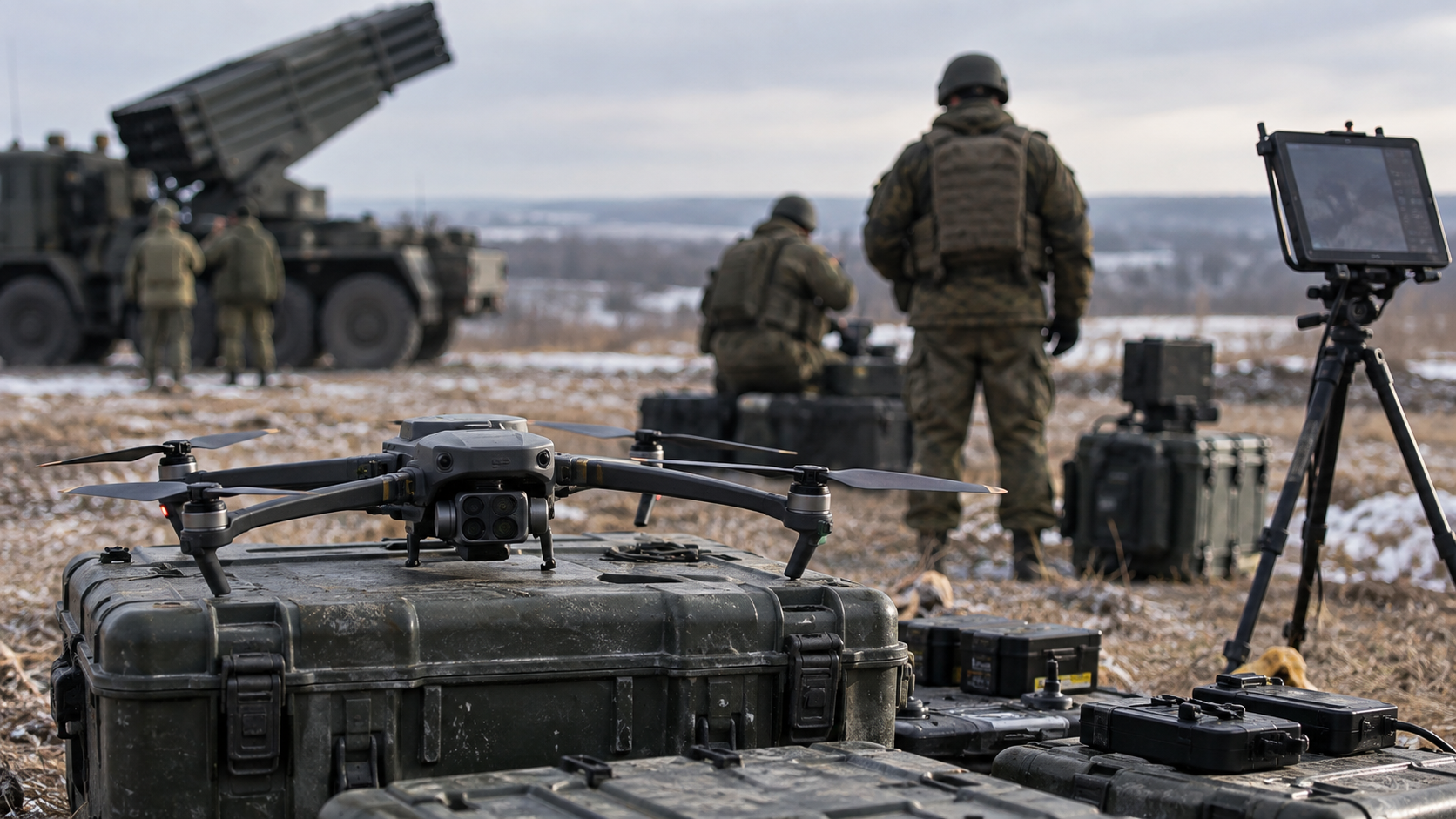
In the first three months after they arrived in Russia’s Kursk Oblast in October 2024, North Korean units lost roughly 40 percent of an 11,000-strong contingent: about 1,000 dead and some 3,000 too badly wounded to keep fighting. By the start of 2026, South Korea’s National Intelligence Service put cumulative North Korean casualties at around 6,000 killed or injured, drawn from a force of perhaps 14,000 to 15,000 troops rotated through the front since the deployment began. Ukrainian defence intelligence has since raised its own estimate above 7,000, and the true figure is almost certainly higher still, though the gap between the two reflects differing treatment of the wounded as much as fresh losses. Read as a butcher’s bill, the numbers look like a defeat. Read correctly, they are tuition. North Korea is paying in blood for the one military asset its hermit army has lacked since the 1953 armistice: real combat experience against a peer-grade adversary. That veteran cadre, and the Russian technology arriving alongside it, will outlast this war by decades and quietly reset the military balance on the Korean peninsula.
The combat gap. For seventy years the Korean People’s Army has been one of the largest standing forces on earth never to have fought a war. Its officer corps trained on Soviet-vintage doctrine, drilled against scripted exercises, and inherited a frozen 1953 conflict that produced parades rather than veterans. An army that has not taken casualties under fire does not know what it does not know; its assumptions about morale, command, logistics and survivability remain untested theory. Estonian intelligence noted that the deployed North Koreans were conditioned for mountainous terrain and had no experience operating in the flat, contested ground of Ukraine, a mismatch that helps explain the early slaughter. Kursk ended the abstraction. For the first time since the Korean War, North Korean soldiers are dying, adapting and surviving under sustained drone and artillery fire delivered by a competent opponent. The casualty rate is the price of converting a parade army into a force with institutional memory of modern combat. That memory is the irreplaceable thing, because it cannot be bought, copied or simulated; it can only be earned under fire, and Pyongyang is earning it on a foreign account.
A brutal curriculum. The early lessons were lethal. Ukrainian units described the first North Korean assaults as obsolete by four decades: dense infantry advancing across open ground without mechanised support, ignoring the saturated drone environment that now governs the battlefield. Ukrainian artillery and first-person-view drones cut these waves apart, which is why the initial three months were so costly. But the survivors learned, and they learned fast. Ukrainian defence intelligence documented a shift from large massed assaults to dispersed movement in groups of one or two, the abandonment of the cannon-fodder wave, and the adoption of counter-drone drills. A notebook recovered from a dead North Korean soldier laid out a three-man team tactic for luring and destroying an FPV drone from a fixed distance. That is not a propaganda detail; it is evidence of doctrine being rewritten in the field.
Closing the loop. By 2026 the North Korean role had migrated up the sophistication ladder. Ukrainian sources report KPA personnel running reconnaissance drones to cue Russian targets, integrating into Russian fire-support arrangements, and absorbing electronic-warfare practice from their hosts. Russian drone units reportedly began providing tank and artillery support to North Korean assaults, while the North Koreans in turn supplied the manpower and the reconnaissance. The significance is not that North Koreans now fly quadcopters; it is that they are compressing the sensor-to-shooter loop, the chain that connects a drone spotting a target to a round landing on it, which is the defining skill of contemporary land warfare. An army that masters that loop on someone else’s battlefield imports a capability that no amount of garrison training inside the Demilitarised Zone could ever generate, because the loop is learned only against an enemy that is actively trying to break it. The men absorbing it now are non-commissioned officers and junior officers, exactly the layer that propagates doctrine downward, and they will spend the next two decades teaching it to everyone beneath them. A single deployment thus seeds an entire training pipeline.
The missile dividend. The transfer running the other way is at least as consequential. North Korea has supplied Russia with large volumes of KN-23 short-range ballistic missiles, which made up a substantial share of the ballistic rounds Russia fired at Ukraine through 2024. The early shipments were inaccurate, with a circular error probable, the radius within which half the rounds land, reported at 500 to 1,500 metres. According to Ukraine’s military intelligence chief Kyrylo Budanov, joint Russian and North Korean work has since tightened that to roughly 50 to 100 metres. Ukraine became an open-air proving ground where Pyongyang debugged a weapon it could never have flight-tested at that volume at home, with Russian engineering closing the gap between a crude area weapon and a precision strike system. A missile that lands within 100 metres of an aim point is a different strategic instrument from one that lands within a kilometre; it threatens command bunkers, airfields and hardened sites rather than merely cities. Every such improvement is now baked into the production line feeding the North Korean arsenal aimed at Seoul, and the regime acquired it without firing a single test shot at its own neighbours.
Counting the cash. The financial flows demand more caution than the headlines allow. South Korea’s Institute for National Security Strategy estimated that troop deployments and arms exports between August 2023 and December 2025 were worth somewhere between $7.67 billion and $14.4 billion to Pyongyang. The high figure has been quoted widely, but the same analysis is blunt about its softness: only an estimated 4 to 19.6 percent of that value appears to have arrived as cash. The personnel deployments themselves account for a relatively modest slice, on the order of $620 million, with the bulk of the headline number representing munitions and missile sales. Most compensation is therefore arriving in kind, as technology, components, technical expertise and industrial inputs rather than hard currency. For the regime that may be the better deal: cash buys imports, but air-defence know-how, missile guidance and submarine technology buy a generational capability upgrade.
The durable asset. Troops withdraw; experience does not. When the last KPA soldier rotates home, North Korea will retain three assets that compound over time. The first is human: a cadre of officers and NCOs who have been shot at, who have buried comrades, and who understand the drone-saturated battlefield from the inside rather than from a manual. The second is data: after-action knowledge of how their doctrine, their equipment and their men actually performed against a Western-supplied adversary, the kind of feedback a closed military almost never receives and cannot manufacture at home. The third is hardware: missile, air-defence and electronic-warfare improvements transferred from Russia and folded into domestic production lines. Reporting also points to Russian cooperation on longer-range air-to-air missiles and submarine technology, the high-value categories Pyongyang has chased for years. None of these assets expires when the shooting stops in Ukraine. They migrate south, toward the only adversary that genuinely matters to Pyongyang, and they decay far more slowly than any troop deployment. A wounded soldier sent home is a liability; a veteran sergeant sent home is a multiplier.
The Verdict. The temptation is to score Kursk by the casualty list and conclude that North Korea bled for Russia’s war and got little back. That misreads the transaction. Pyongyang spent expendable infantry, of which it has a vast surplus, to purchase the two things its military could not otherwise acquire: a battle-tested cadre and a generation of Russian weapons engineering. By 2027 and beyond, planners weighing any peninsula or Taiwan-adjacent contingency will face a Korean People’s Army that is no longer a frozen Cold War relic but a force with recent combat reps, sharper missiles and a working grasp of drone warfare. That shift in deterrence math is the real outcome of this war, and it accrues to the participant losing the fewest headlines. While the West measures the conflict in Ukrainian and Russian terms, the quiet winner is the army that turned someone else’s battlefield into its combat school, and will keep the diploma long after the ceasefire.
Read our full Report Disclaimer.
Important Notice
Bretalon Ltd is not a registered investment adviser or broker-dealer. This report is published free of charge as impersonal, general commentary in a publication of regular circulation. It is not investment, financial, legal, or tax advice, and not an offer or recommendation to buy, sell, or hold any security; no report recommends, rates, or values any specific security. Do not rely on it for investment or business decisions; always consult a qualified professional. It speaks only as of its publication date, and its views on companies, securities, and markets are analytical opinion, not fact. As of 22 October 2026, neither Bretalon Ltd nor those involved in its reports have ever been paid by any company a report discusses (unless expressly disclosed in the report). Those involved hold no direct positions in individual securities and hold any securities only through mutual funds and similar pooled or collective investment funds. Bretalon Ltd provides strategic advisory services to publicly listed and privately held companies under separate written agreements. This report was drafted with AI from public sources, its illustration is AI-generated, and it was approved for publication by a person acting for Bretalon Ltd. Provided "as is" without any duty of care to readers. Read our full Report Disclaimer.