
The Weekend That Changed Mathematics
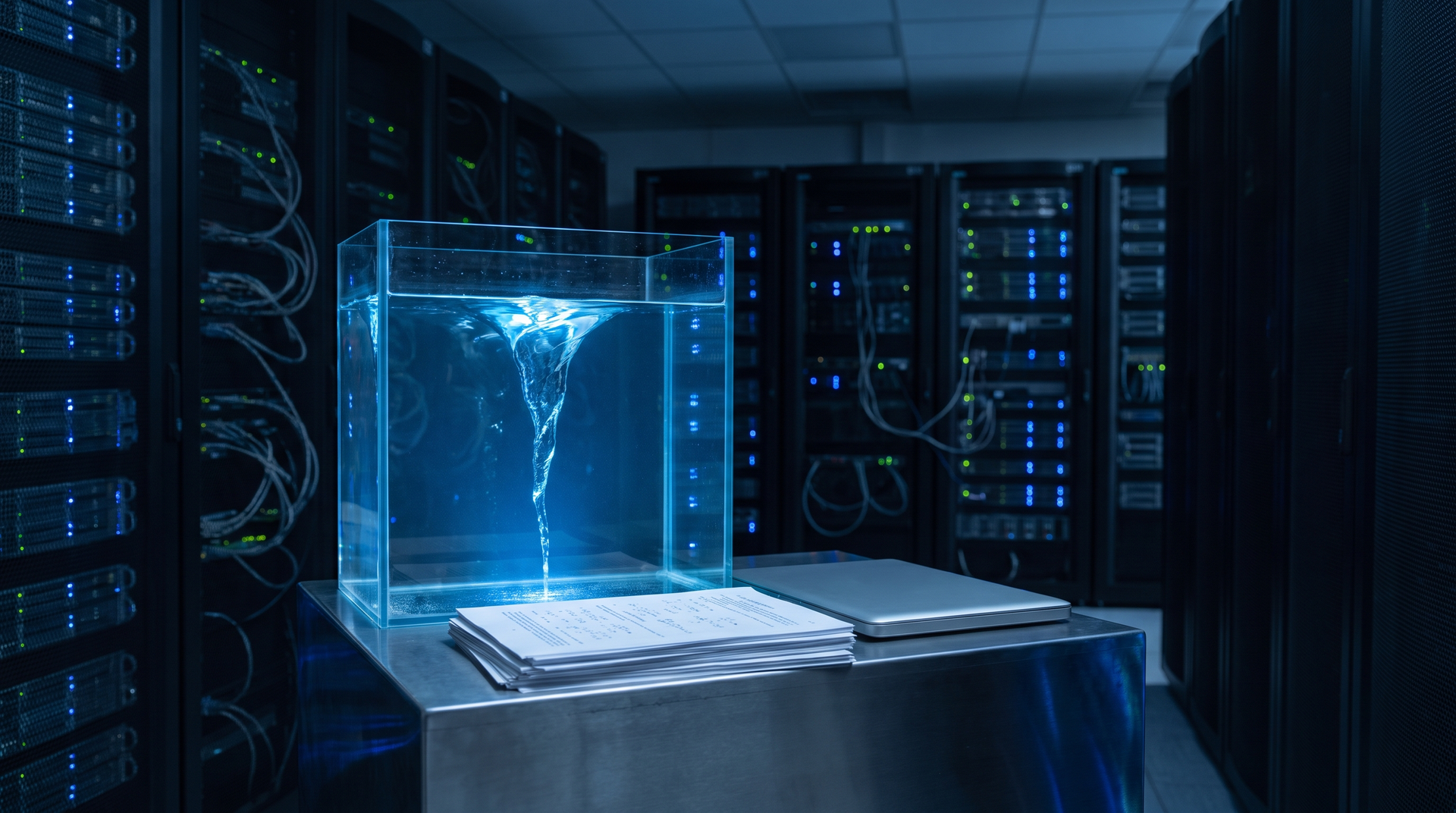
On 8 September 2026 OpenAI announced that an internal artificial intelligence system had produced a proof resolving the Navier-Stokes existence and smoothness problem, one of the seven Millennium Prize Problems established by the Clay Mathematics Institute in 2000. The question, open for roughly ninety years since Jean Leray’s foundational work in the 1930s, asks whether smooth solutions to the equations governing viscous fluid motion remain smooth for all time or can break down into singularities. OpenAI’s answer is negative: a fluid at rest, pushed by a smooth external force, can tear itself apart in finite time, velocities becoming unbounded. The company shared both a written proof and a machine-checked formalisation in the Lean proof assistant, completed in an additional seventeen hours. It explicitly declined to claim the million-dollar prize.
The result arrived roughly eighty-eight hours after the proof attempt began on 1 September. The model that produced it, described only as “significantly more capable” than GPT-6 Astra, remains unreleased. Astra itself launched on 3 September. The training run for the Navier-Stokes model started on 28 August. In eleven days OpenAI moved from initiating a training run to announcing a result that the global mathematics community had failed to reach across nine decades. Pace itself is the story.
The Deep Blue Moment for Pure Thought
Tristan Buckmaster, the NYU mathematician whose own work on related equations provided a critical pathway, called the announcement “a Deep Blue-Kasparov moment”. The comparison is apt but understates the shift. When IBM’s machine defeated Garry Kasparov in 1997, chess remained a closed game with fixed rules and finite positions. The Navier-Stokes problem is open-ended research: no predetermined search space, no clear metric of progress, no guarantee a solution exists at all. The machine did not outplay a human at a known game. It found something humans could not find.
Mathematics has long served as the final redoubt of human cognitive exceptionalism. The discipline’s culture is built on individual genius, on the Fields Medal awarded to a person under forty, on priority disputes stretching back to Newton and Leibniz. A career-making result, the kind that defines a mathematician’s life, can now be compressed into a long weekend of compute. Luis Silvestre of the University of Chicago captured the mood: “Yesterday and today are crazy days.”
Roughly ten thousand coordinating agents exchanged 2.7 million messages to reach the solution. About 130 billion output tokens were spent on Navier-Stokes alone, some 300 billion across all problems attempted in the same campaign. This is not a single mind. It is a swarm, a pattern that may preview how superintelligent systems actually operate: many coordinated instances, not one consciousness. The solitary genius, chalk in hand, is being replaced by an industrial process measured in tokens and electricity.
Credit, Provenance and the Asymmetry of Access
The announcement landed alongside a credit dispute that Axios framed as overshadowing the result itself. Buckmaster and Levent Alpöge, a researcher at Anthropic, had proved on 15 August that three fluid equations, including the inviscid Euler equations, develop finite-time blow-up under smooth external forcing. Their work, also Lean-verified, used frontier language models heavily. Terence Tao called it “a remarkable achievement” and said he saw no obvious obstacle to the methods eventually being pushed to Navier-Stokes. Euler is the frictionless cousin of Navier-Stokes; the viscous case is harder, but the route was clear.
According to Buckmaster’s four-page statement, posted around midnight on 8 September, OpenAI contacted him on 3 September saying an internal model had produced a forced Navier-Stokes proof. Two publication proposals followed. The first: Buckmaster and Alpöge post the Euler result, OpenAI posts Navier-Stokes the next day. The second: Buckmaster alone writes up the Navier-Stokes paper crediting OpenAI’s model, without Alpöge as coauthor. Buckmaster says Alpöge’s removal was requested twice and that his employment at Anthropic was cited as the obstacle. He reports being told “If you don’t want me to be nice, then I don’t have to be nice” and asked “Why would you ruin your career?” after indicating he would make the circumstances public. A contentious phone call with OpenAI mathematics team lead Sébastien Bubeck took place on 6 September.
Buckmaster has not seen OpenAI’s proof and makes no direct accusation. He raised the question of whether OpenAI’s systems could have accessed his private drafts or learned his research direction and accelerated. OpenAI’s response: “the researchers and the agents did not see any of their work through any means until they released it publicly; in particular, no specific user data was accessed in order to solve this problem.” Bubeck called the allegations “false and inflammatory”. OpenAI added: “While unlikely, we cannot rule out that de-identified data helped improve our models.”
The structural asymmetry is worth noting. OpenAI can observe how researchers use its tools. Researchers cannot observe what OpenAI’s internal models do. Buckmaster wrote: “The route to the Clay problem through a smooth force is the one Levent and I had quietly chosen to attack. Almost nobody else I know of was working on it.” Whether or not any impropriety occurred, the incentive landscape is unfavourable to academics. A lab that can see researchers’ drafts, even indirectly through usage patterns, sits in a different position from researchers who see only the lab’s public outputs.
Proofs Nobody Fully Understands
OpenAI frames the result’s reliability as resting on the Lean kernel, not on trusting the model’s reasoning. But a Lean proof checks only the formal statement encoded; it does not certify that the formal statement matches the Clay problem, which humans must confirm. Some mathematicians have asked whether the forcing route is a “loophole” in the Clay formulation rather than the physically motivated unforced question. The Clay Institute still lists the problem as open and the prize unclaimed. Under Clay rules, a solution must be published in a qualifying outlet, remain published for at least two years, and receive general acceptance from the mathematical community.
As of the announcement, no independent mathematician had publicly verified the proof. The written document had not been widely released. Tao has separately worried that if AI completes exploration in a closed environment and humans receive only a verified final result, valuable intermediate ideas never reach the community. His “big mathematics” model envisions complex problems broken into modules, humans and machines collaborating, formal proof systems verifying and reassembling results. That model assumes openness. A swarm of agents exchanging 2.7 million messages inside a proprietary system does not produce intermediate ideas that anyone outside the lab can learn from.
OpenAI chief scientist Jakub Pachocki has said that as AI systems become more capable, monitoring their reasoning becomes harder. The monitoring problem is present in this result. The proof exists; the process that generated it is opaque.
The IPO and the Narrative Asset
OpenAI filed a confidential draft registration statement with the SEC in mid-2026, with Goldman Sachs, Morgan Stanley and JPMorgan leading the deal. The original target was a listing as early as September 2026 at a valuation above one trillion dollars. On 19 August CFO Sarah Friar told employees the company “will be a public company in 2027”, or sooner if “our business continues to inflect”. She cited financial-reporting readiness, revenue durability under public scrutiny, and multi-year compute spending obligations. The latest private valuation, set on 31 March, is 852 billion dollars, established on closing a 122-billion-dollar funding round led by SoftBank.
A Millennium Prize result is the ultimate narrative asset for a company that needs to justify a near-trillion-dollar valuation and enormous compute obligations. Revenue is strong (roughly two billion dollars monthly run rate in 2026, enterprise segment growing about fifty percent) but the valuation implies expectations far beyond current cash flows. Investors are asked to price a capability they cannot use, test or independently verify; the model is unreleased.
The credit controversy is a governance flag. A company preparing for public markets that finds itself accused of pressuring an academic to exclude a collaborator employed by a competitor, and of asking “Why would you ruin your career?” when he resists, faces questions about how it will behave when the stakes are higher. The dispute will be litigated in public perception, not in court, and public perception matters to an IPO.
Greg Brockman, speaking at the Astra launch on 3 September, said: “I think it’s not unreasonable to feel that we are now in the AGI era.” He added: “If we fast forward a couple years, and we look back and say when was it really that AGI was created, I think it’s going to be about this time.” Sam Altman, less than a month earlier, called AGI “not a super useful term” and largely an “irrelevant marketing term”. The dissonance is not accidental. Altman’s framing manages regulatory and contractual risk; Brockman’s framing manages investor narrative.
The Displacement Ladder Inverts
The usual story about automation is that it displaces routine work first and creative work last. The Navier-Stokes result inverts the ladder. The most elite cognitive work, the kind that wins Fields Medals and defines careers, can now be done by rented compute in a weekend. If the top of the intellectual hierarchy is not defensible, what is?
The realpolitik is straightforward. The labs capture the gains. The researchers, the universities, the national academies, the journals, the entire apparatus of credentialing and priority that organised intellectual life for centuries, bear the adjustment. The question is who makes decisions now, and on what basis.
Buckmaster, in his statement, wrote: “There is a far bigger story here… the sheer magnitude of what frontier models can now do.” The credit dispute, however bitter, is a sideshow. The main event is that a machine solved in eighty-eight hours what the profession could not solve in ninety years. Those making decisions about careers, investments, national competitiveness, and the structure of knowledge work should update accordingly.
Read our full Report Disclaimer.
Report Disclaimer
This report is provided for informational purposes only and does not constitute financial, legal, or investment advice. The views expressed are those of Bretalon Ltd and are based on information believed to be reliable at the time of publication. Past performance is not indicative of future results. Recipients should conduct their own due diligence before making any decisions based on this material. For full terms, see our Report Disclaimer.