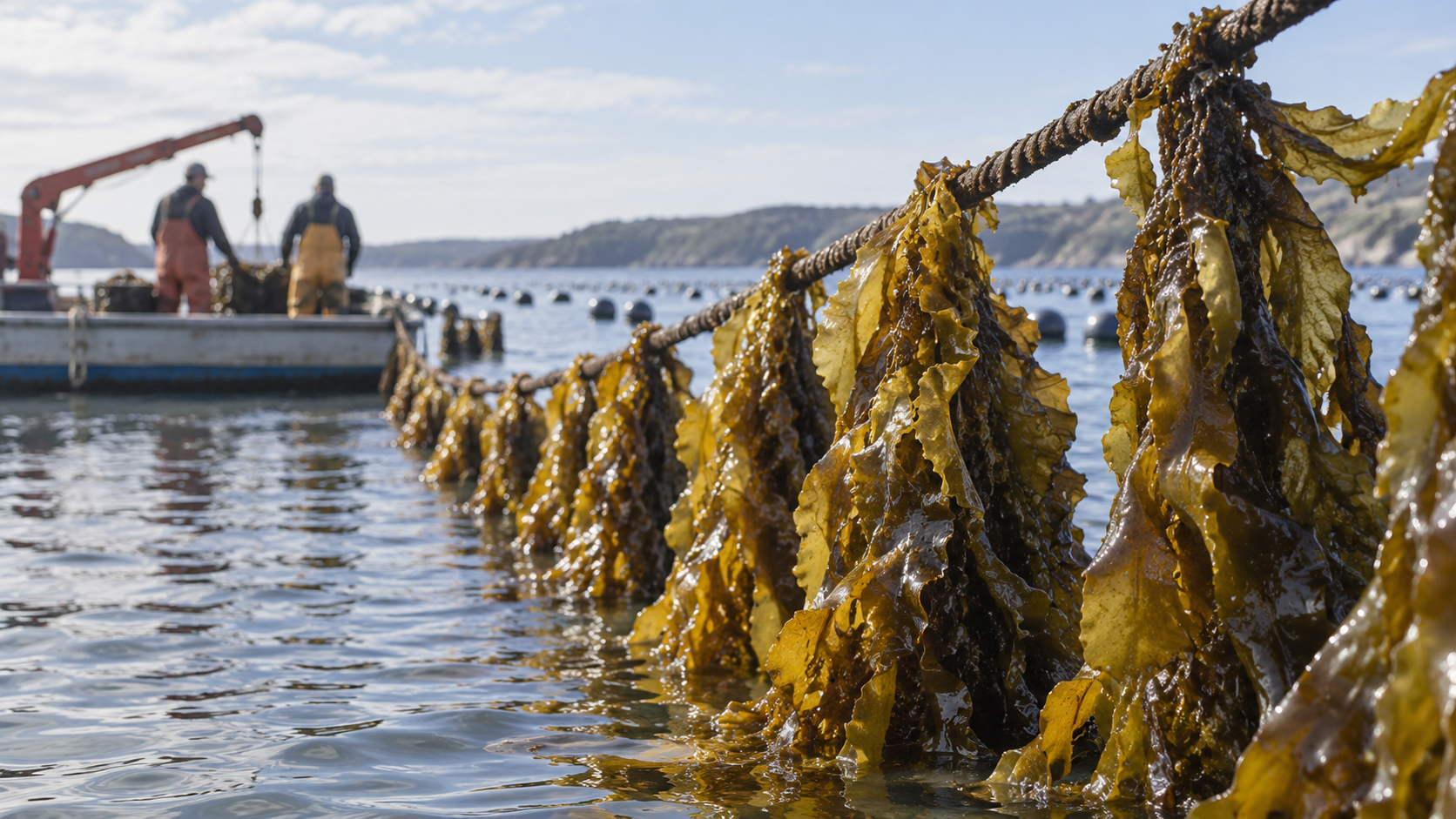
It clings to rocks, washes up on our beaches, and gets tangled in our feet. For most of human history, seaweed has been little more than a coastal curiosity. But beneath the waves, a quiet revolution is taking place. This unassuming marine algae, often dubbed “green gold,” is emerging as one of the 21st century’s most formidable problem-solvers, offering tangible solutions to some of our most intractable challenges: plastic pollution, climate change, and environmental degradation. Recent breakthroughs are rapidly moving seaweed from the laboratory to the mainstream, spawning a vibrant new “blue economy” in the process.
Perhaps the most visible battlefield seaweed has entered is the war on plastic. Every year, millions of tonnes of single-use plastic choke our oceans and landscapes. The solution, it turns out, might come from the ocean itself. London-based startup Notpla, a winner of the prestigious Earthshot Prize, is pioneering materials derived from seaweed that are not just biodegradable, but in some cases, entirely edible.
Imagine running a marathon and, instead of grabbing a plastic cup, you’re handed a small, squishy bubble of water you can pop in your mouth. At the 2019 London Marathon, Notpla did just that, distributing 36,000 of its revolutionary “Ooho” water pods. The company has since developed a seaweed-based coating for takeaway food boxes, a direct replacement for the plastic lining that renders most containers unrecyclable. By 2023, Notpla had already replaced over 4.4 million units of plastic, partnering with giants like Just Eat to roll out what could soon be 100 million plastic-free containers across Europe. It’s a compellingly simple idea: a package that comes from the ocean and can safely return to it, decomposing as naturally as a piece of fruit.
While seaweed packaging tackles a visible crisis, another of its applications is fighting an invisible but far more potent threat: methane. The world’s 1.5 billion cattle are a huge source of this powerful greenhouse gas, which they release through burps as part of their normal digestion. It sounds almost comical, but enteric methane is a major driver of global warming. The solution, discovered by researchers in Australia and the US, is astonishingly effective. Adding a tiny amount, less than half a percent, of a specific red seaweed called Asparagopsis taxiformis to a cow’s diet inhibits the gut microbes that produce methane, slashing emissions by a staggering 80 to 90 percent.
This isn’t just a laboratory quirk. Companies like Sweden’s Volta Greentech are already commercializing the technology. In 2022, they partnered to launch “Lome Beef,” the world’s first low-methane beef sold in supermarkets. Labels on the packaging proudly informed customers that the cows’ seaweed-supplemented diet had cut their daily methane output by up to 90%. As Professor Ermias Kebreab of UC Davis quipped, “We might have a seaweed solution for cow burps.” If scaled globally, this single innovation could mitigate a significant portion of agriculture’s climate footprint.
Beyond providing products, the very act of farming seaweed is a powerful force for environmental good. New research reveals that seaweed farms are unsung climate heroes, acting as potent “blue carbon” sinks. A landmark 2024 global study led by the NGO Oceans 2050 found that sediments under seaweed farms bury carbon at rates comparable to mangrove forests and salt marshes – ecosystems renowned for their carbon-storing prowess. The study projects that a scaled-up global seaweed industry could sequester up to 140 million tonnes of CO₂ annually by 2050. Because kelp can grow up to 60 times faster than terrestrial trees, it draws down carbon with incredible efficiency.
At the same time, these underwater forests act as ecological restoration engines. They function as living reefs, providing critical habitat and nursery grounds for fish and invertebrates. A comprehensive analysis led by NOAA found that fish populations are, on average, 1.6 times higher in and around seaweed farms. They are also natural water purifiers, absorbing the excess nitrogen and phosphorus from agricultural runoff that causes choking algal blooms and coastal “dead zones.” A single acre of farmed seaweed can remove a “grizzly bear’s weight” of nitrogen from the water each year, providing a vital service that could be worth up to $10,000 in avoided water treatment costs.
This wave of innovation is fuelling a booming blue economy, creating wealth and opportunity in coastal communities worldwide. The global seaweed market, valued at over $17 billion in 2023, is projected to double within a decade. While Asia has traditionally dominated production, providing livelihoods for over a million people in Indonesia alone, a new generation of startups is sprouting in Europe and North America. From kelp farms in Maine supplying gourmet chefs to bioplastic designers in London, seaweed is cultivating a new class of jobs. It offers a lifeline to fishing communities, providing a stable, climate-friendly income that can empower women and revitalize working waterfronts.
The final frontier for seaweed may be energy. The dream of turning algae into biofuel has been around for decades, but macroalgae offers a key advantage: it requires no land, freshwater, or fertilizer. While still in its early stages, the progress is real. A European project successfully powered a car for 80 kilometres on a fuel blend containing 10% biobutanol derived from kelp. In India, Sea6 Energy has partnered with a national petroleum company to convert farmed seaweed into bioethanol. The path to cost-competitive seaweed fuel is steep, but for hard-to-decarbonize sectors like aviation and shipping, it remains a tantalizingly sustainable prospect.
From edible packaging to climate-friendly cows, from carbon-sinking sea forests to a multi-billion-dollar global industry, seaweed is undergoing a profound transformation. What was once dismissed as ocean debris is now being recognized as a cornerstone of a circular, regenerative future. The challenges of scaling up are significant, requiring investment, innovation, and smart policy. But the momentum is undeniable. The future, as one observer noted, may not be plastic; it may very well be seaweed.
Read our full Report Disclaimer.
Report Disclaimer
This report is provided for informational purposes only and does not constitute financial, legal, or investment advice. The views expressed are those of Bretalon Ltd and are based on information believed to be reliable at the time of publication. Past performance is not indicative of future results. Recipients should conduct their own due diligence before making any decisions based on this material. For full terms, see our Report Disclaimer.