Jensen Huang closed a week-long European tour, through Paris, London, Stockholm and Dublin, on the stage of Berlin’s Tempodrom on 21 October. The GTC Berlin keynote was billed as a celebration of Europe’s AI economy. In substance it was a sales presentation for a complete industrial system: chips, racks, networking, cooling, power management, agent security software, open models and robotics reference designs, all from one American supplier. Nvidia says it has committed nearly $10 billion to the European technology ecosystem over the past year, works with more than 12,000 partners on the continent, and announced 14 startup investments during the tour itself. The offer to Europe is speed. The price is dependency. In our assessment, for most European governments and industrial firms that is a rational bargain, but it should be understood as one.
The Factory Argument
Huang’s framing is that AI is a manufacturing industry, not a software trend. His “five-layer cake” runs from energy, to computing, to AI factories, to models, to applications, and his pitch to Europe was blunt: “You don’t want to just be consuming the AI. You want to be producing the AI.” The economics he put on stage explain why Nvidia now cares about construction schedules. By his figures, a one-gigawatt AI factory costs about $50 billion including land, power, shell and equipment, and could generate around $40 billion of revenue a year. On that arithmetic, a three-month delay forgoes roughly $10 billion.
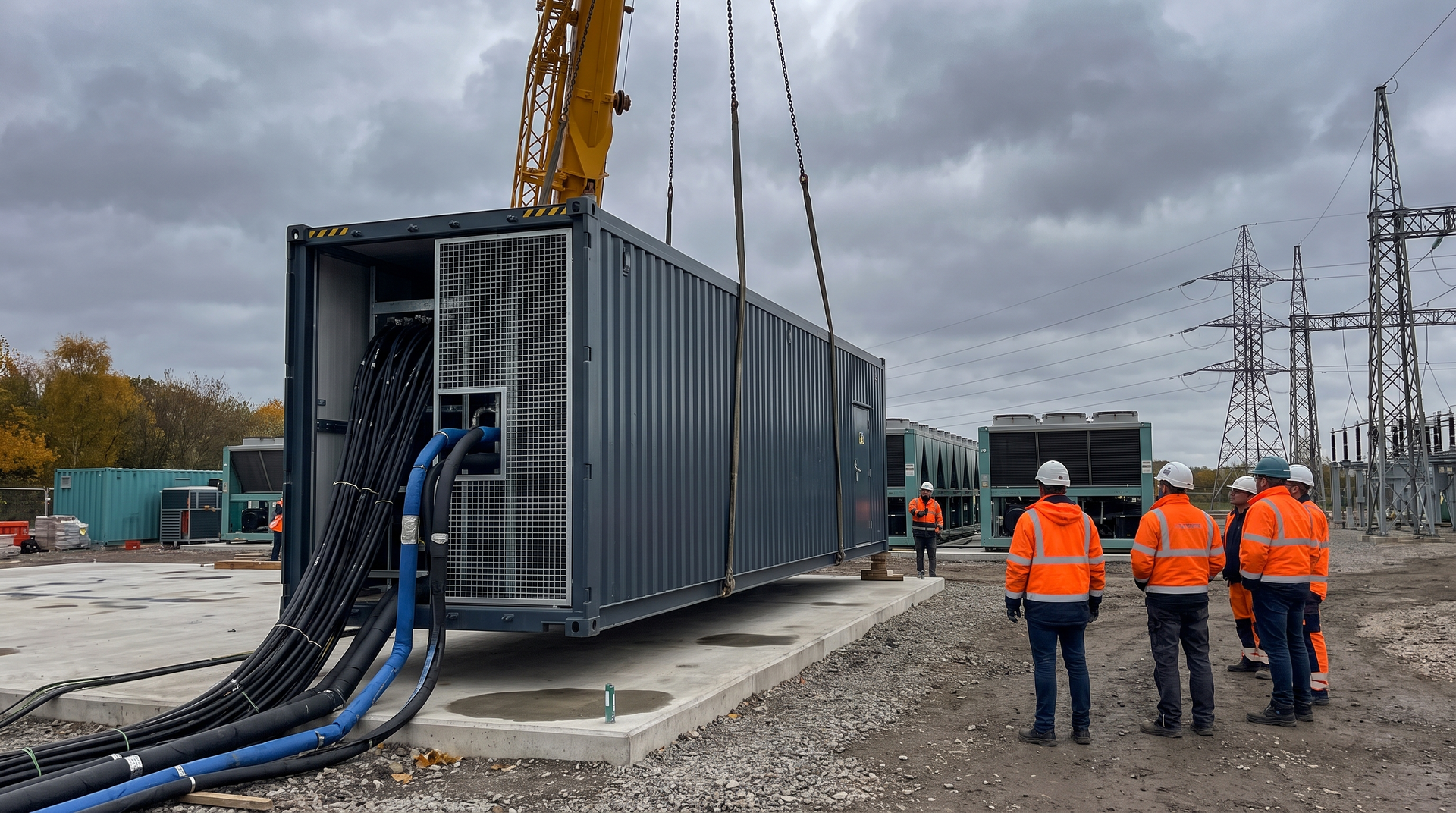
The headline announcement, DSX POD, targets exactly that delay. It is a reference design for complete Vera Rubin AI factories built by partners inside modular containers, with rack-to-rack cabling, piping and functional validation completed before shipment. Nvidia’s keynote video described seven liquid-cooled Vera Rubin NVL72 racks joined by 17 kilometres of Spectrum-X cabling per pod. Nvidia claims deployment at a prepared site falls from six months to as little as 14 days, with partner deliveries worldwide in early 2027. Seventeen partners are named, including France’s Bull, Schneider Electric, Dell, HPE, Lenovo, Vertiv and Foxconn’s Ingrasys. The caveat matters: the 14-day figure excludes preparing the site’s power and connectivity, which is where European projects actually stall. Strategically, DSX POD moves Nvidia further up the value chain, from selling components to defining the factory itself, with integrators reduced to licensed assemblers of an Nvidia blueprint.
Energy Is Europe’s Weakest Layer
The cake starts with energy, and that is the layer where Europe is least competitive. Industrial electricity remains structurally more expensive than in the United States, and grid connections for large loads take years. Nvidia’s answer is efficiency claims. It says its DSX MaxLPS power control loop delivers the same token output with up to 30 percent less power. Vera Rubin supports full liquid cooling with coolant up to 45°C, allowing outdoor dry coolers in place of evaporative towers; Nvidia estimates savings of 54 million litres of water a day at two gigawatts. In an early DSX Flex trial involving Emerald AI, EPRI, Nebius and the UK’s National Grid, a Blackwell Ultra cluster reportedly cut its draw by up to 40 percent during simulated grid events.
These are vendor results, not independent measurements. They are nonetheless aimed precisely at the European objection to AI infrastructure, which is political as much as technical: water use, grid stress and competition with households for power. A factory that can shed load on request is easier to permit. No amount of rack-level efficiency, however, substitutes for the generation and transmission capacity Europe has been slow to build.
Agents Need a Warden
The software half of the keynote dealt with AI agents, which Huang decomposed into five elements: a model, a harness that orchestrates work and memory, a secure sandbox, a knowledge foundation and tools. His emphasis was security. “The most important thing is to make sure the agent is secure,” he said, and Nvidia’s own video mocked the current practice of instructing agents not to delete files or touch credentials as the “please don’t” approach. Nvidia’s answer is OpenShell, an open-source runtime released under Apache 2.0 that enforces policy on system calls, file access and network connections from outside the agent, keeps credentials beyond the agent’s reach, and checks policy changes against a permission ceiling using formal verification. Sentry, running on BlueField-4 data processing units, adds a hardware-isolated monitor designed to quarantine a misbehaving agent within milliseconds.
Anthropic announced on 28 September that it is pairing its Claude Managed Agents with OpenShell, and Nvidia released an OpenShell reference architecture in Berlin. The strategic logic is clear. Whoever defines the trust boundary for autonomous software controls the pace of enterprise adoption. For European firms working under the AI Act, an enforcement layer that sits outside the model is attractive. It also anchors agent governance in Nvidia silicon, which is the point.
Sovereignty on Borrowed Silicon
Huang offered Europe “sovereign intelligence” through open models. Nvidia publishes its Nemotron language models along with training data and reproduction scripts, and argued that companies can post-train them on proprietary data to reach frontier performance in their own domains. Forrester’s Paul Miller put the counterpoint plainly to The Register: Nvidia is not European, and firms with critical dependencies on it are “unlikely to meet the purest definitions of European tech sovereignty.” French press reporting earlier this year noted that all known bids for the EU’s planned AI gigafactories rely exclusively on Nvidia chips. The hyperscalers are moving in parallel: Google Cloud announced general availability of Vera Rubin instances from next month, with planned expansion to Europe and ambitions to scale to as many as 960,000 Rubin GPUs across multiple sites. Its first customer is Ineffable Intelligence, the London start-up founded by AlphaGo creator David Silver.
The purist definition of sovereignty is not on offer, and it has not been for a decade. In our view the operative definition is narrower and more useful: jurisdiction over data, control of operators, and ownership of the models trained on European industrial knowledge. Measured that way, building on an allied American stack is a defensible choice, and plainly preferable to the alternative suppliers. Europe’s real leverage lies in its industrial customers and the proprietary data they hold. Siemens is investing €500 million in its Erlangen technology campus and says inspection tools built with Nvidia’s Cosmos models target up to 85 percent less manual engineering effort. That is where value accrues to European balance sheets.
Physical AI Plays to European Strengths
Huang reserved his most flattering remarks for European engineering, arguing that no region matches Europe in mechatronics and precision manufacturing. The physical AI announcements followed that line. Volkswagen Commercial Vehicles, JLR, Volvo and next-generation Mercedes-Benz models will be compatible with Hyperion, Nvidia’s standard autonomous vehicle architecture of 14 cameras, nine radars and three lidars. Bolt plans to roll out at least 25,000 L4-capable Lucid vehicles, subject to regulatory approval. German firm Agile Robots will build Agile ONE SN, a 1.4-metre reference humanoid on Isaac GR00T with 31 degrees of freedom, due in early 2027. In telecoms, Nvidia cited roughly 100,000 base station sites and about 100 gigawatts of distributed capacity that it expects to become AI infrastructure, after T-Mobile completed what Nvidia calls the first AI-RAN call on a commercial network with Nokia. “Now CUDA makes phone calls,” Huang said.
The pattern is standardisation. Hyperion does for carmakers what Android did for handset makers: faster time to market in exchange for ceding the platform layer. European manufacturers gain capability they could not build alone, and lose some control over where the margin settles.
The Interruption
About twenty minutes in, protesters stood on chairs beneath a banner bearing a Greenpeace logo and reading “Nvidia, clean up your dirty business!” One asked about reports that Nvidia chips had been found in Russian drones, and environmental damage was also raised. Huang told security to go easy, said “All important issues, but let me get through my keynote,” and carried on. Greenpeace had published no statement by Wednesday afternoon. The underlying reports are Ukrainian claims, relayed by Tom’s Hardware, that Jetson Orin modules were found in Russia’s S-71 cruise missile, and on an August report that the modules were recovered from a Russian AI drone that killed three civilians in Ukraine. Nvidia has said the modules are consumer-grade products sold to students, developers and start-ups, are not sold in Russia, were not designed for military use, and that it cannot track resale of used units.
The environmental complaint is a familiar sideshow. The drone question is not, and it bears directly on the vision Huang was selling. The edge computers that let a humanoid navigate a factory are the same class of hardware that lets a munition find a target. Commodity modules sold in volume through open channels will leak through sanctions regimes; the lever is Western enforcement against transshipment and resale networks, not corporate intent. A continent that embraces physical AI at scale while fighting a war of drones on its eastern flank will have to treat that problem as a matter of state policy.
The Bargain
Berlin confirmed that Nvidia now sells an operating model as much as a product: factory-built AI plants, a security regime for agents, open models to customise, and reference robots to copy. Europe receives a fast path into an industry it would otherwise watch from the sidelines. Nvidia receives a market of wealthy industrial customers, standardised on its architecture. The likely outcome is that Europe’s AI economy grows quickly and runs largely on American silicon. Whether it captures a proportionate share of the value will depend less on chips than on the layer Huang mentioned first and Europe has neglected longest: energy.
Read our full Report Disclaimer.
Important notice
Bretalon Ltd is not authorised or regulated by the Financial Conduct Authority. This report is published free of charge as general commentary. It is not investment, financial, legal or tax advice, not an investment recommendation, and not an invitation or inducement to engage in investment activity. Do not rely on it, in whole or in part, to make investment or other decisions; take independent advice from a suitably qualified professional. It reflects information available on its publication date, and its assessments of companies, securities and markets are opinion, not fact. It was drafted with AI from researched briefs and the cited sources, its illustration is AI-generated, and it was approved for publication by a person acting for Bretalon Ltd, which takes editorial responsibility for it. Bretalon Ltd does not assume any duty of care to readers. Read the full Report Disclaimer and AI Transparency Notice.