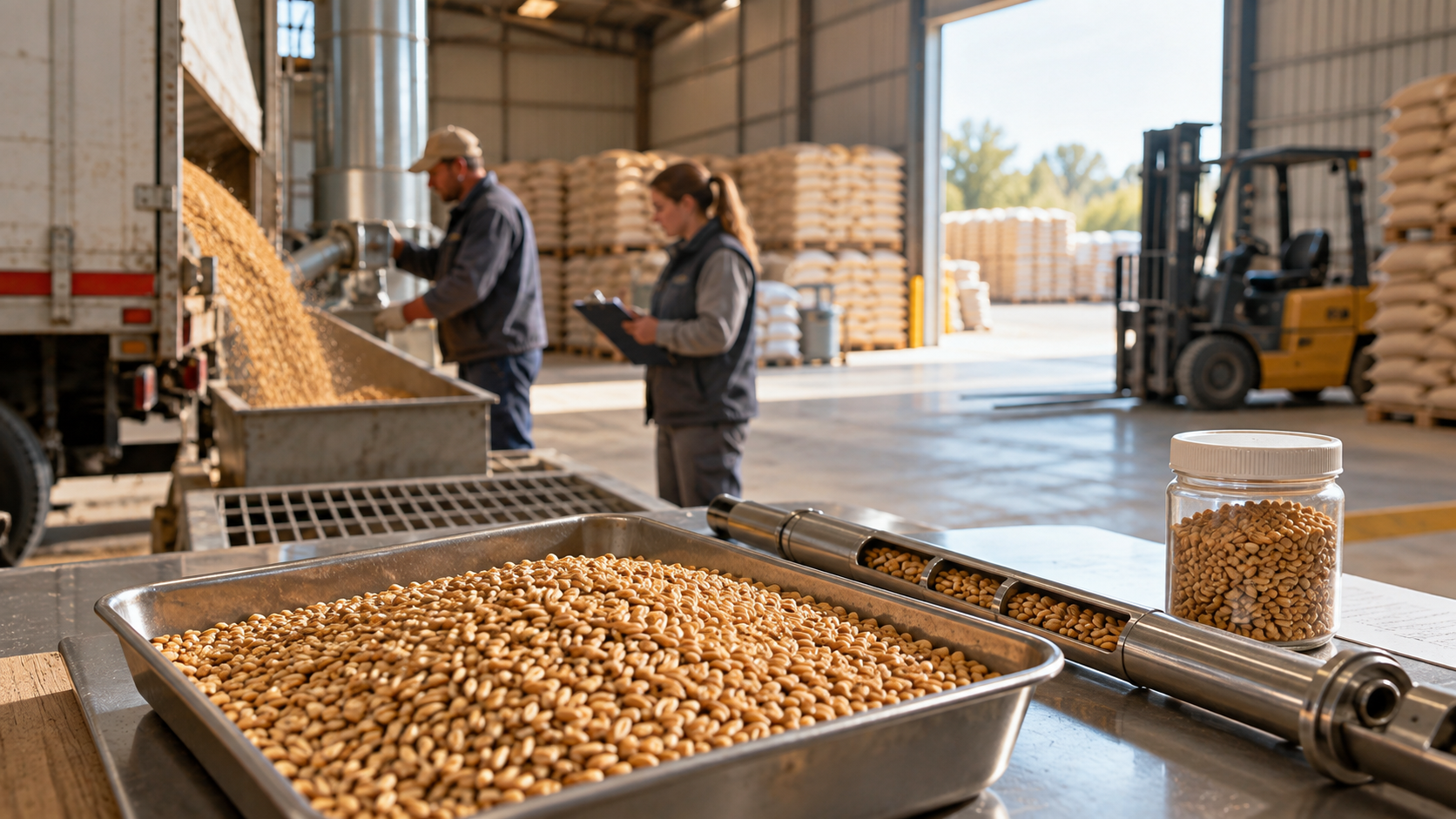
Every nation that matters keeps a hidden inventory of things it hopes never to need. Crude oil sealed in salt caverns, wheat and rice rotating through state granaries, cobalt and tantalum in government warehouses, gold bars stacked in vaults beneath capital cities, ventilators and antiviral medication in anonymous depots. These stockpiles are expensive, illiquid, and for years at a stretch entirely idle. They earn no return and generate no revenue. Yet states build them, guard them, and quietly expand them, because a reserve is not an investment; it is insurance against a specific catastrophe the holder believes is plausible. Read in that light, a national stockpile becomes one of the most honest documents a government produces. A budget describes what a state wants. A reserve describes what it is afraid of.
The Logic of Holding What You Hope Not to Use
The economic case for a stockpile rests on a single asymmetry: the cost of holding is steady and bounded, while the cost of not holding during a genuine disruption is concentrated, sudden, and potentially regime-ending. A government that runs out of fuel cannot bid for it at any price if the tankers have stopped arriving. A population that runs short of grain does not riot in proportion to the price; it riots in proportion to the empty shelf. Markets clear in money, but shortages clear in panic, and panic is the variable that statesmen actually price.
This is why reserves cluster around inputs that are simultaneously essential, storable, and import-dependent. You cannot stockpile electricity, or trust, or skilled labour. You can stockpile a commodity with a long shelf life and a chokepointed supply chain, and so that is precisely what governments do. The United States Strategic Petroleum Reserve, carved into roughly sixty caverns hollowed out of Gulf Coast salt domes with an authorised capacity of around 714 million barrels, exists because oil is fungible globally but its delivery passes through a handful of straits and refineries that an adversary, an accident, or a hurricane can close.
The salt cavern itself is a study in the economics of patience. Crude is stored by dissolving rock with fresh water and pumping oil into the resulting void, a method chosen because it is cheap to maintain across decades. The reserve is engineered for an event that may arrive once a generation. That is the defining feature of strategic stockpiling: it is rational only if you take low-probability, high-severity events seriously, which is exactly the calculation most private actors decline to make.
The Inventory as Confession
Compare two granaries and you have compared two anxieties. China’s state reserves, managed principally through the China Grain Reserves Group (Sinograin) across hundreds of dedicated depots, are estimated to hold roughly half of the world’s wheat and rice stocks and a large share of its corn. A country that buries that much grain is telling you, without saying a word, that its central fear is not military defeat but a domestic supply shock in a nation whose social contract has historically been written in the price of food. The reserve is sized to feed the population for many months without depending on anyone abroad, because that is the duration of disruption the leadership has decided it must be able to absorb alone.
The American mix confesses different fears. A petroleum reserve speaks to an economy organised around mobility and the dollar’s link to oil. A revived defence stockpile of cobalt, antimony, and tantalum, with recent programmes committing on the order of a billion dollars of metals to holdings that had withered from a Cold War peak worth roughly twenty-five billion dollars in today’s money, speaks to a fear of being cut off from the inputs of advanced manufacturing and precision weapons. And a Strategic National Stockpile of masks, antivirals, and ventilators, valued at several billion dollars, encodes the memory of a pandemic that found the cupboard nearly bare.
What a state declines to stockpile is equally revealing. Few governments hold large strategic reserves of finished semiconductors, because chips age into obsolescence faster than any vault can preserve their value; the fear is real but the instrument does not fit. The contents of the warehouse, in other words, are a map of which threats a government believes it can buy its way out of in advance.
When Reserves Stabilise, and When They Distort
A reserve works as designed when it dampens a genuine supply shock and then is rebuilt. A modest oil release can shave a few percentage points off spot prices and ease the premium that markets demand for immediate delivery, buying time for supply to recover. Used this way, the stockpile is a shock absorber: it converts a violent price spike into a manageable bump and forestalls the cascade of hoarding and rationing that a perceived shortage triggers.
The distortion begins when a reserve is used to manage a price rather than a shortage. If a government releases barrels to suppress prices that are high for structural reasons, it masks the underlying signal that should be pulling new supply into the market, and it depletes an asset it will eventually have to repurchase at cost. Worse, a state release can crowd out private inventory: commercial holders, knowing the government stands ready to sell, hold less themselves, so the public buffer substitutes for the private one rather than supplementing it. The aggregate cushion does not grow; it merely changes owners, and the taxpayer absorbs the carrying cost the market used to bear.
Grain reserves distort in a quieter way. A buyer large enough to hold a substantial fraction of world stocks does not merely insure itself; it becomes a price-maker. When such a buyer accumulates, it tightens the global market and raises prices for every poorer importer; when it releases, it can crater the income of its own farmers. The line between prudent self-insurance and de facto market influence is drawn not by intent but by scale, and at sufficient scale the two grow hard to distinguish.
The Signal in the Vault
Reserves talk even when they sit still. The mere existence of a credible buffer deters the speculative attack and the opportunistic supplier, because both know the holder can outlast a squeeze. This deterrent value is why the threshold matters as much as the contents. The International Energy Agency obliges its members to hold emergency oil stocks equal to at least ninety days of net imports, and that shared floor is itself a signalling device: a coalition announcing that no single producer can hold it hostage for three months.
Gold is the purest signal of all, because it earns nothing and sits in a central bank’s vault for one reason: it is the only major reserve asset that no foreign government can freeze. China’s official gold holdings, accumulated to well over two thousand tonnes while the dollar’s share of its reserves has been steadily trimmed, are a message about sovereignty rather than yield. The lesson was delivered in 2022, when a Western coalition immobilised roughly three hundred billion dollars of Russian central bank reserves, the larger part of it sitting in European clearing systems. A reserve held inside another jurisdiction’s financial plumbing is a hostage; gold in your own vault is not. Every tonne purchased since is a sentence in the same argument.
The Costs of Caution
Insurance has premiums, and reserves are no exception. Grain rots and must be rotated. Medical stockpiles expire; much of a pandemic cache can prove useless against the next pathogen and is eventually destroyed unused, which is the visible price of having held it against an uncertain threat. Gold and idle oil forgo the return they would earn deployed elsewhere. A stockpile is a standing bet that the world is more dangerous than the spot market assumes, and the carrying cost is the recurring confession that the bet has not yet paid off, which is precisely the outcome the holder wants.
There is also a political cost. A large reserve invites the temptation to spend it on present convenience, smoothing a price spike to ease a public mood, and a buffer drawn down for comfort is not available for catastrophe. The discipline of refusing to touch the reserve except in true emergency is harder to maintain than the engineering that built it.
Strip away the technical detail and a stockpile is an act of imagination: a government picturing the day the ordinary channels fail, and deciding, in advance and at cost, which failures it will not permit. The oil tells you a state fears the strait will close. The grain tells you it fears its own streets. The metals tell you it fears the factory will fall silent, the medicine that the hospital will be overrun, the gold that its money will be turned against it. The surest way to learn what a nation believes about the fragility of the order it lives in is not to read its speeches but to inventory its vaults, and to ask why those particular things, in those particular quantities, were judged worth burying against a day everyone hopes will never come.
Read our full Report Disclaimer.
Report Disclaimer
This report is provided for informational purposes only and does not constitute financial, legal, or investment advice. The views expressed are those of Bretalon Ltd and are based on information believed to be reliable at the time of publication. Past performance is not indicative of future results. Recipients should conduct their own due diligence before making any decisions based on this material. For full terms, see our Report Disclaimer.